
If you've recently started playing chess and heard someone ask, "What's your USCF rating?", you may have wondered what those numbers actually mean.
A USCF rating is much more than a “score.” you get. It represents your playing strength, helps you compete against similarly skilled opponents, and tracks your progress over time. Whether your goal is to enter your first local tournament or eventually compete at a national level, understanding how the USCF rating system works is one of the first steps in your chess journey.
In this guide, we'll explain what a USCF rating is, how ratings are calculated, what different rating ranges mean, and how you can earn your very first official rating at Chicago Chess Center.
What Is the USCF?
The United States Chess Federation (USCF) is the official governing body for competitive chess in the United States.
Founded in 1939, the organization oversees thousands of rated tournaments every year, establishes official competition rules, certifies tournament directors, and maintains the rating database for American chess players.
When you become a USCF member and participate in a rated tournament, every official game contributes to your rating. As you continue competing, your rating becomes a more accurate reflection of your current playing strength.
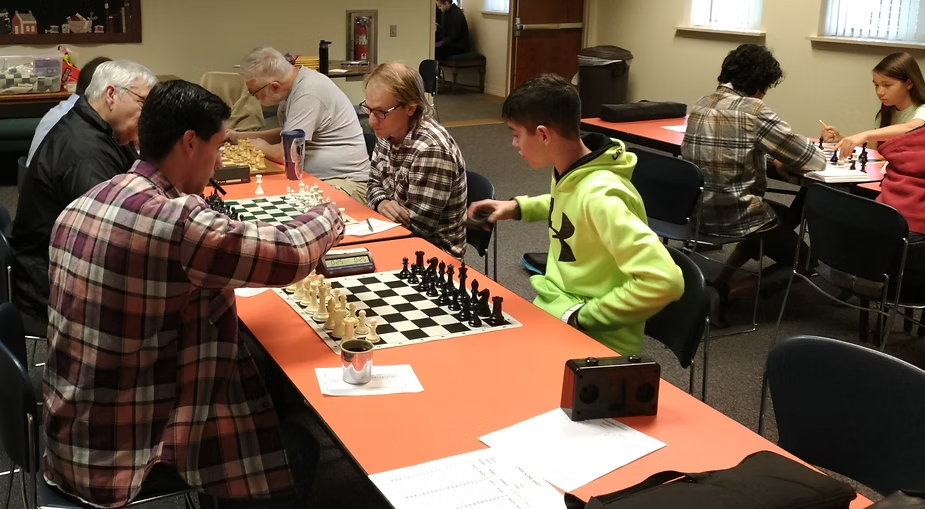
Unlike online chess ratings found on platforms such as Chess.com or Lichess, a USCF rating is earned exclusively through official over-the-board tournaments.
What Is a USCF Rating?
A USCF rating is a numerical estimate of your chess strength based on your results in official tournaments.
Rather than simply counting wins and losses, the rating system also considers the strength of the players you face.
For example:
Defeating a stronger opponent usually results in a larger rating gain.
Losing to a much stronger player often causes only a small decrease.
Losing to someone significantly lower-rated generally results in a larger rating loss.
Because of this, every game you rate matters, and your rating naturally adjusts as your playing level improves.
For beginners, the rating is best viewed as a progress tracker—not as a measure of personal worth.
How Does the USCF Rating System Work?
The mathematics behind chess ratings can become quite technical, but the basic idea is surprisingly simple.
Before each rated game, the system estimates how likely each player is to win based on their current ratings.
After the game:
If you perform better than expected, your rating goes up.
If the result matches expectations, your rating changes very little.
If you perform worse than expected, your rating decreases.
A Simple Example
Imagine you have a rating of 1000.
You defeat a player rated 1200. Since this was considered an “upset,” your rating increases noticeably.
You beat another 1000-rated player. Your rating increases by a smaller amount.
You lose to a 1700-rated player. Since the stronger player was expected to win, your rating may only decrease slightly.
Over dozens of games, your rating gradually settles around your true playing strength. This makes the system remarkably accurate over time.
USCF Rating Ranges Explained
Although every player's journey is different, the following chart provides a helpful overview of typical rating ranges.
Rating Typical Skill Level
Under 800 New beginner learning fundamentals
800–999 Beginning tournament player
1000–1199 Developing player with tactical awareness
1200–1399 Improving club player
1400–1599 Strong club competitor
1600–1799 Advanced club player
1800–1999 Expert-level competitor
2000–2199 National Expert
2200+ National Master and above
It's important to remember that improvement isn't always linear.
Many players experience periods where their rating stays nearly the same before making significant breakthroughs after improving calculation, positional understanding, or endgame technique.
Is a USCF Rating Different From Chess.com or Lichess Ratings?
Yes.
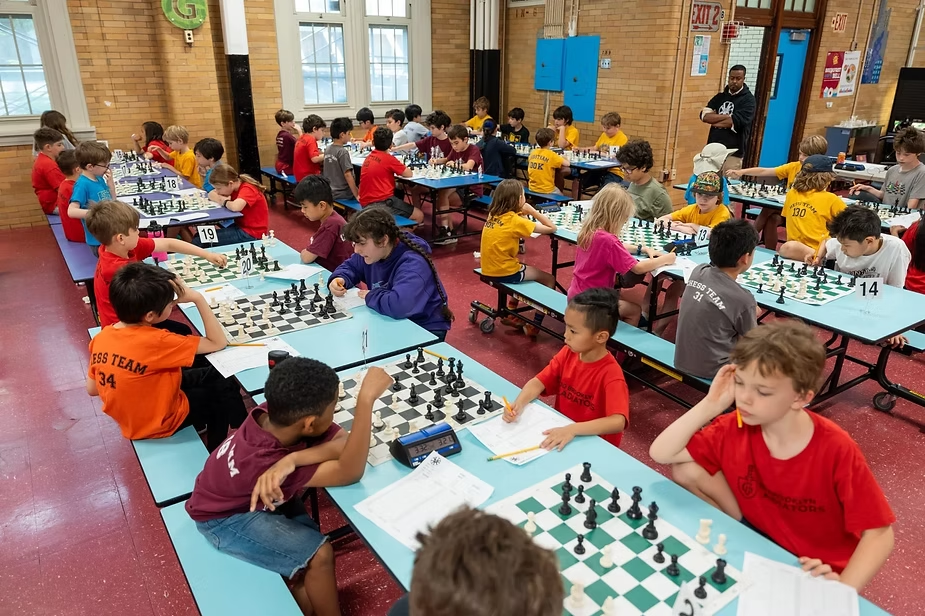
One of the biggest misconceptions among beginners is assuming all chess ratings are interchangeable. They are not!
Each organization uses its own rating formula, player pool, and competitive environment.
For that reason:
A 1400 Chess.com rating does not necessarily equal a 1400 USCF rating.
Lichess ratings are calculated independently.
FIDE ratings are used for international competition.
USCF ratings are used for official tournaments within the United States.
Instead of comparing numbers across platforms, focus on improving your overall chess skills.
Your ratings on different systems will naturally reflect your progress over time.
How Do You Get Your First USCF Rating?
Getting your first official USCF rating is actually much simpler than most beginners think.
The first thing you need is an active US Chess Federation membership. Without it, your tournament games cannot be submitted for an official rating.
Once you have a membership, the next step is to enter a USCF-rated tournament. Most cities have local events that are very beginner-friendly, and many tournament organizers are used to helping first-time players through the registration process.
Then comes the important part: playing your games. Every rated game counts toward your initial rating, so there is no need to worry about getting a “perfect” result. Many strong players lost games in their first tournament. What matters is that you start building a rating history.
After the tournament ends, the organizer submits the results to the US Chess Federation. A few days later, your first official USCF rating appears in the federation’s database.
From that point on, each tournament you play helps refine your rating and gives a more accurate picture of your playing strength.
Get Your First USCF Rating at Chicago Chess Center
If you're in the Chicago area, Chicago Chess Center (CCC) provides one of the most beginner-friendly environments for earning your first official rating.
Our Beginners Open tournaments are designed specifically for new tournament players.
You'll enjoy:
A welcoming atmosphere for first-time competitors
Experienced tournament directors
Fair pairings against players of similar strength
Guidance throughout the tournament process
Opportunities to continue improving through lessons and future events
If you've been waiting for the right moment to start playing competitive chess, this is it.
Frequently Asked Questions
What is a good first USCF rating?
There isn't a "good" starting rating. Most beginners begin somewhere between 600 and 1200 depending on previous chess experience. The important part is establishing a baseline from which you can improve.
How many games does it take to get a USCF rating?
Your initial rating is calculated after playing your first rated tournament games, though it becomes more accurate as you play additional events.
Does my USCF rating expire?
Your rating remains in the USCF database permanently. However, you'll need an active membership to participate in new rated tournaments.
Can I improve my rating quickly?
Yes. Beginners often improve rapidly during their first year by studying tactics, reviewing games, and competing regularly.
Is a USCF rating required to play chess tournaments?
Only rated tournaments require a USCF membership and rating. Many clubs also offer casual events that anyone can join.
Ready to Earn Your First USCF Rating?
The best way to understand the rating system is to experience it yourself.
Whether you've only played online or have never entered a tournament before, Chicago Chess Center makes the process simple and welcoming.
Play your first rated game at CCC by registering for the next Beginners Open.
Before signing up, be sure to read our Tournament Registration Guide to learn exactly what to expect on tournament day.
Your official chess journey starts with a single rated game—and every master once played their first one. Good Luck!!
